
Despite boasting a rich architectural career in Vietnam and globally, RSP Vietnam’s General Director, Tan Quee Peng, 53, began the interview by bluntly admitting that he initially never wanted to be an architect.
As he explains, architecture was his last choice when applying to university. During his first-year studies, Quee Peng convinced himself against dropping out, saying, “Why don’t I finish this for a basic degree before I get out?”. At an internship, his supervisor firmly said, “You may think otherwise but you are an architect.” and that convinced him to consider being an architect.
Since then, Quee Peng worked in Beijing, Shanghai, India and Singapore. Today, he leads RSP’s Vietnam Office as General Director and Nominated Chair for Construction and Development Subcommittee for the Singapore Chamber of Commerce Vietnam.
Yet, he remains humble about his career. Referencing Singaporean businesswoman and wife of the Senior Minister of Singapore, Lee Hsien Loong, Ho Ching, who described herself as a ‘reluctant CEO’, Quee Peng jokes, “Too bad that I’m not a reluctant CEO. I’m a reluctant architect.”
His Journey Into RSP
Quee Peng began his career at RSP when a mutual friend introduced him to Senior Managing Director, Chee Kien.
While working in the Singapore office, Quee Peng cites Resorts World Sentosa as his most memorable project. He explains, “I’m working on things that I’m familiar with and I enjoy the complexity of the interrelationship between the different functions. I also enjoy the planning, and I get to engage in the design part of things.”
A year after joining, management asked if Quee Peng would like to head up China’s Master Plan studio, a question he was perplexed by.
“Do you even do master planning?”
“No, that’s the question, right?” He replied. “It’s not my specialty.”
One year later, he was asked to relocate but this time to Vietnam, a move he agreed to. Due to the COVID pandemic however, he handled affairs for both the Singapore and Vietnam offices remotely. When it was possible, he took the second flight available and that was how his architectural career in Vietnam began.
“Part of the reason why I was asked to go is because I don’t think there are many people who worked overseas before,” Quee Peng reflects. “I’ve worked in China, India, Malaysia and Singapore so management thought, “Okay. You can probably handle it.”
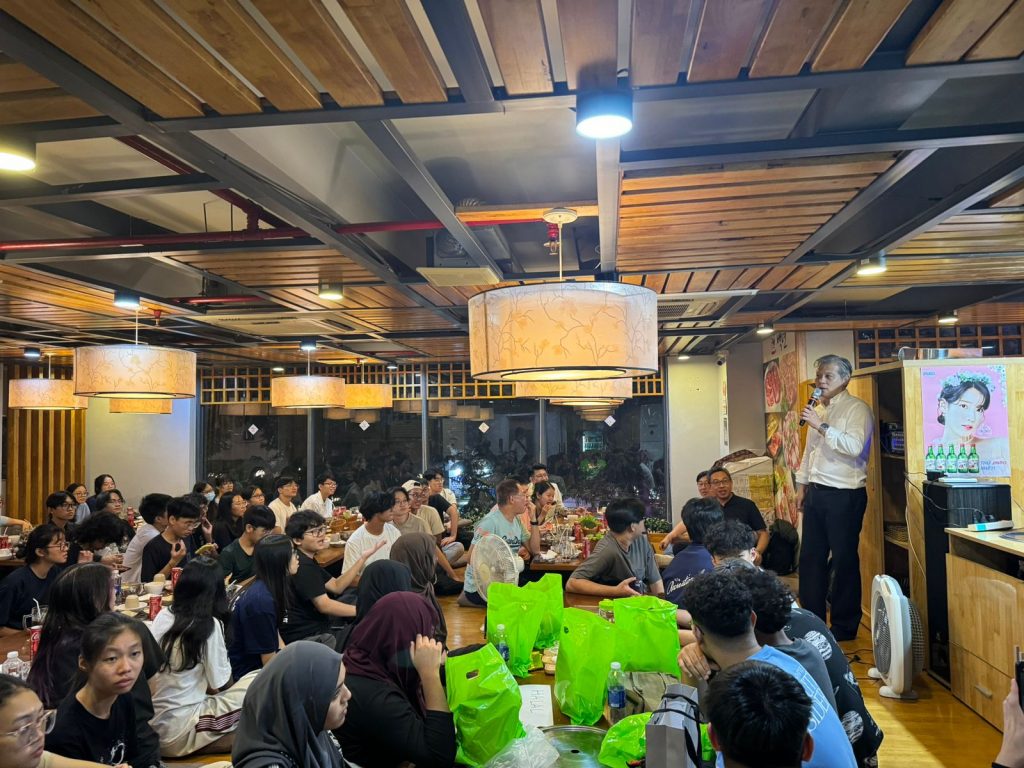
Quee Peng speaks at various events in Vietnam as General Director of RSP Vietnam and Nominated Chair for Construction and Development Subcommittee for the Singapore Chamber of Commerce Vietnam.
Why He Likes Vietnam
After working in the country for three years, Quee Peng’s admiration for Vietnamese culture is evident in the way he speaks highly of it. For one, he cites food as one of his favourite aspects.
“The food here is very good and healthy,” he says. “Over there, I get one bowl of Pho and one plate of vegetables, which I throw in. It’s soupy and I eat the whole bowl.” Additionally, he finds the nine-to-ten-degree temperatures during winter enjoyable.
Little things aside, he finds meaning in looking at the bigger picture to consider the global context he works in.
“Culturally, you understand how to work with people across boundaries,” Quee Peng says. He recognises that people work differently but fundamentally, “I also think that we are all human. You look for common values that we can connect with—the virtues of working hard, working smart and getting things done.”
This introspective side enables him to embrace his architectural career in Vietnam. Fondly, he reminisces on his nostalgia when stepping into Vietnam for the first time.
“This is just like Shanghai twenty years ago—the traffic, the people and the mindset. There is this optimism where people want to be there. You hear the young people say they want to do well and forge a new path forward.” He smiles. “That’s very encouraging to see and I want to see this through.”
What Does it Mean to Work Overseas?
Despite his self-proclaimed ‘reluctant architect’ status, Quee Peng found satisfaction in his work. RSP’s motto “Design meets humanity” sums up his feelings.
“You do design and see the execution throughout and in the end, you get a lived space and a lived experience. Whether you’re working on a table, a house, a building or a city, you can influence and improve people’s lives through everything that you do.”
This sense of purpose is amplified through the platform to share his experience as a Nominated EXCO and Chair for Construction and Development Subcommittee for the Singapore Chamber of Commerce, Vietnam.
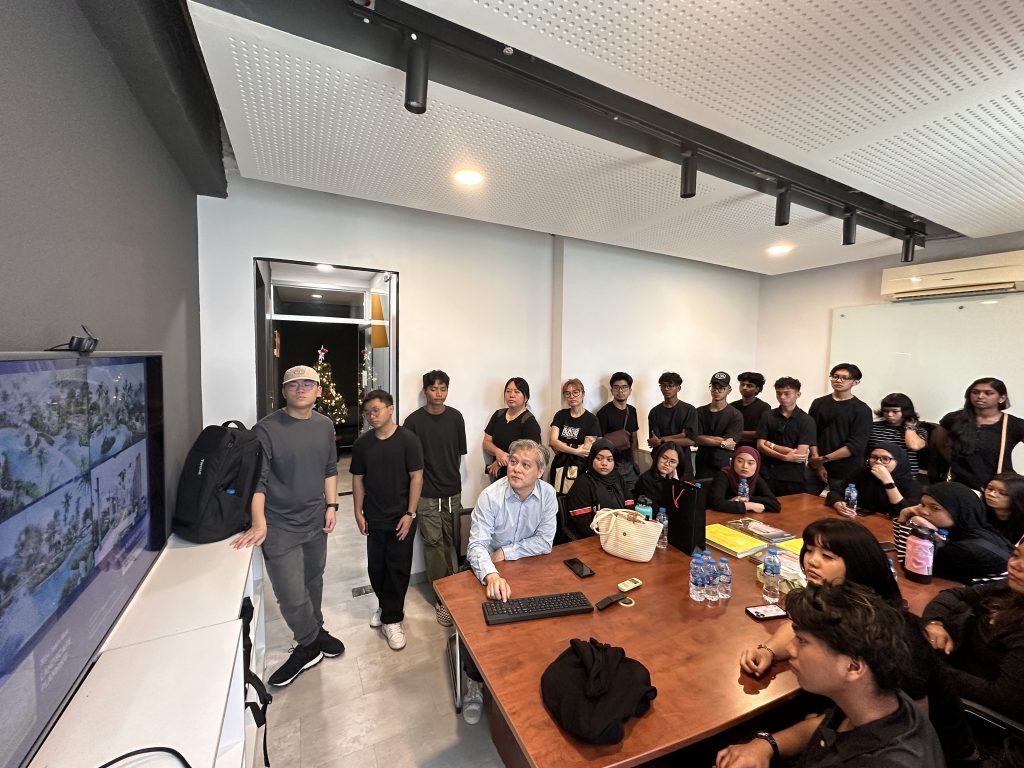
Recently, he shared his knowledge working overseas to students from Singapore’s Temasek Polytechnic (TP)’s Global Studies Overseas Studies Trip program and Institute of Technical Education (ITE)’s Architectural Technology course.
Within that context, Quee Peng considers why there is such an interest towards Vietnam. For the students, he remembers them saying, “Why not?”. For businesses, he recalls the attention international firms give to starting projects in Vietnam.
Although interested in the business prospects, Quee Peng remains grounded by considering the individual’s perspective and what working overseas means to him.
“Perhaps these businesses are more enterprising, but you also learn to see yourself and who you are as an Asian as part of a larger Asian community,” he said. He then concluded the interview on an inspiring note:
“You have all these skills, you’re competitive. Rather than being here—yes, the payment is good—but you can do so much more elsewhere. The outside is not as well connected and that’s where you have a role to play to shape the future.”