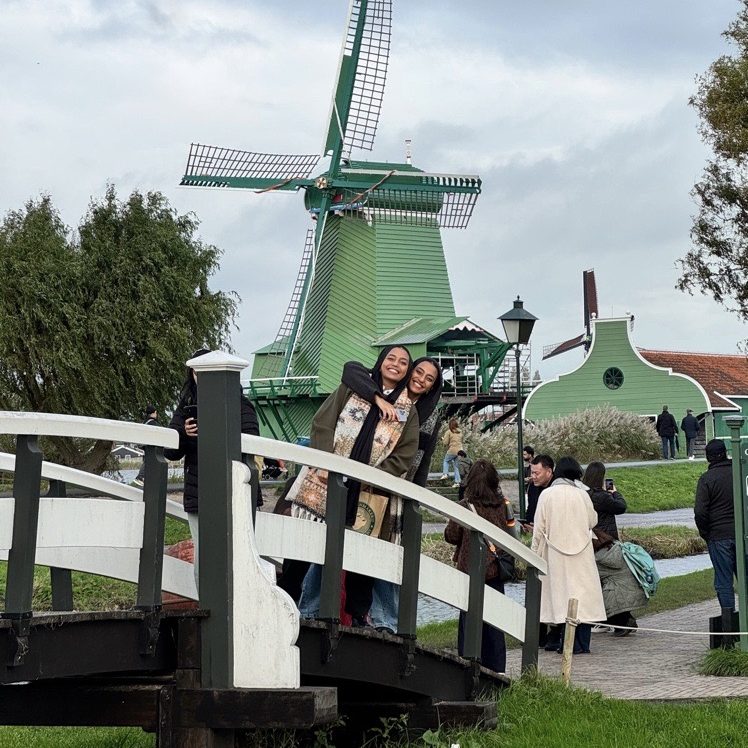

In this new series of features, we highlight talented members of the RSP team. This week, we introduce our twin design architects, Aiah and Janna Adel Shehata, from RSP’s Dubai office.
Meet Aiah and Janna Shehata
Besides sharing the same DNA, 27-year-old identical twins Aiah and Janna Adel Shehata, who are born three minutes apart, also share the same career and workplace. Growing up between UAE and Egypt, their educational pathways are also similar: both are architecture graduates of the American University of Sharjah and were selected for the National Pavilion UAE Internship Program at the Venice Architecture Biennale. After short stints at other architectural firms, eventually, both of them ended up working in RSP’s Dubai office as young design architects.

They are ‘identical mirror twins’: Janna is left-handed and Aiah is right-handed. As for who’s older, it depends on which source you consult. The hospital photos labeled Aiah as the first to come out, but their birth certificates say that Janna is older. But the twins trust the hospital photos more.
Because both their parents work in education — their father is a university professor and their mother is a school advisor — they appreciate learning and the opportunities it brings. They were born in Ohio, United States, when their father was completing his PhD. Afterwards, they moved to Egypt for three years and then settled in Abu Dhabi, where they have lived for more than 20 years.
Describing themselves as ‘extremely close’, they naturally went into the same profession (the longest they have ever been apart from each other was three weeks, when they did different stints at the UAE National Pavilion.) Because they look very similar, and share clothing items, they are often mixed up by others. But the twins say that they have different energies. “Aiah is more grounded and Zen, while I’m the goofier one, especially in the office,” says Janna.
Outside of work, Aiah is interested in photography, especially of architecture, whereas Janna is into fashion design, having been sketching designs for more than 15 years. Janna says: “I’m currently working on bringing some of the pieces to life, and if I hadn’t studied architecture, I would have definitely pursued fashion school.”
Janna
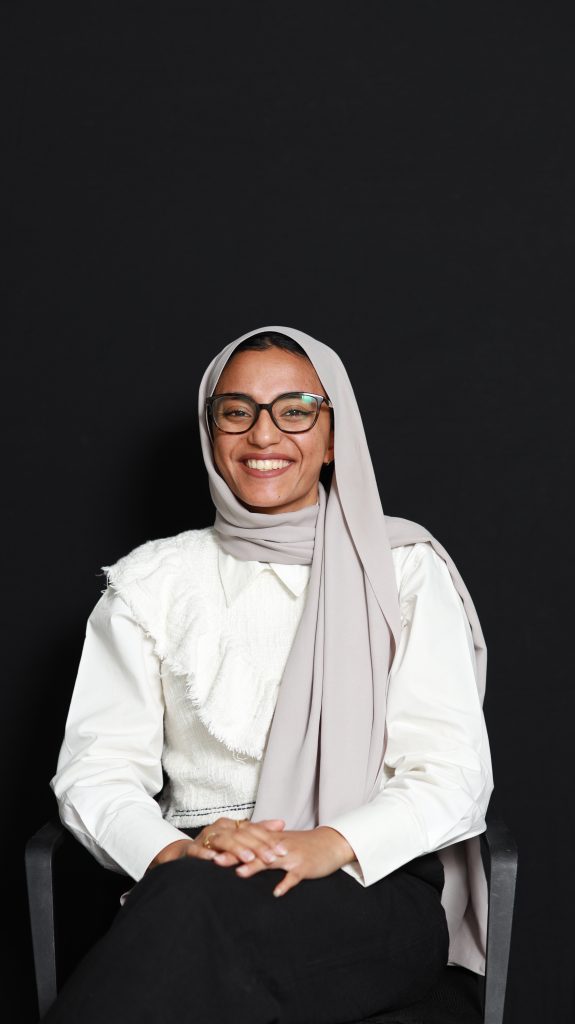
Key Projects: TreeHouse Hotel, Diriyah Gateway Offices
How and when did you decide that you wanted to be an architect?
Growing up between the UAE and Egypt, I was surrounded by a mix of traditional and modern architecture — from the quiet elegance of old neighborhoods to the boldness of contemporary buildings. I was fascinated by how light, materials, and proportions could completely change the atmosphere of a space. That fascination stayed with me and eventually drew me to architecture, where I could create spaces that are meaningful to the people who use them.
What is your design philosophy?
Inspired by Peter Zumthor, I see architecture as more than form — it’s about atmosphere and memory. Light, texture, and detail all shape how a space feels. My philosophy is to create architecture that’s rooted in context, emotionally resonant, and memorable not only for how it looks, but for how it makes people feel.
What excites or satisfies you most about your work?
What excites me most is how architecture can carry emotion. It’s in the small moments — the way light enters a room, the texture of a surface, or how people instinctively feel at ease in a space. I love when design moves beyond function and becomes part of someone’s memory, when it makes them pause, reflect, or feel comfort. Those moments are what make the process meaningful to me.
How RSP supported you with opportunities for professional growth or development?
RSP exposed me early to diverse and challenging projects, which developed both my design skills and confidence. Mentorship from senior architects and involvement in client presentations gave me valuable learning opportunities. Working hands-on with the technical team was also very insightful, as it deepened my understanding of how ideas translate into buildable details.
What would be a dream project that you would like to design?
A dream project for me would be humanitarian in nature — designing housing or schools for underserved communities. I believe architecture can restore dignity and bring comfort, and I would love to create spaces that are practical yet uplifting, where design directly improves people’s lives.
Aiah
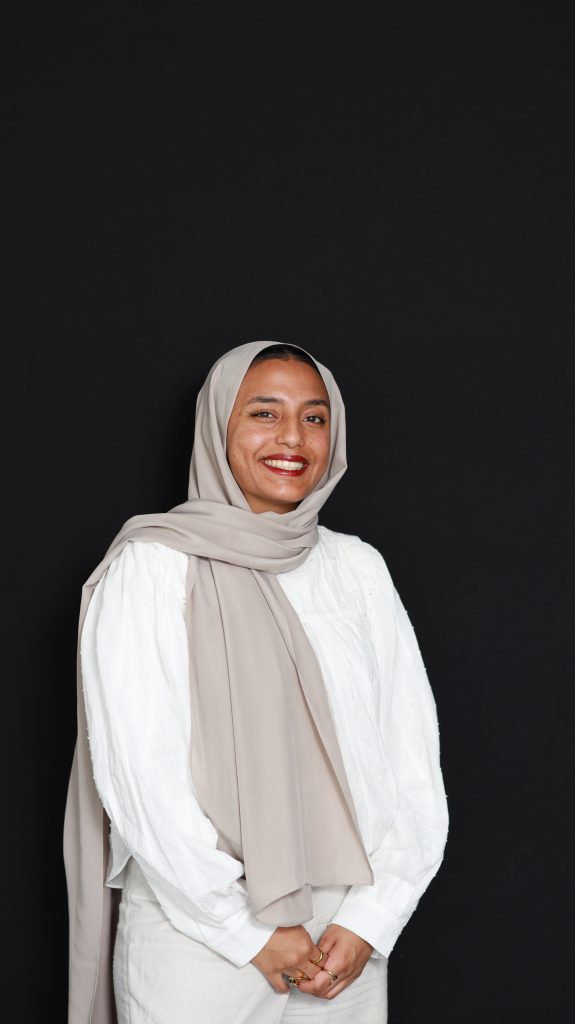
Key Projects: Qiddiya EVS, The Arthouse
How and when did you decide that you wanted to be an architect?
I’ve always been intrigued by how environments come together and the way they are experienced in real life. Traveling and exploring buildings in different cities taught me to notice light, materiality, and scale, while photography sharpened my sensitivity to detail and atmosphere. Architecture felt like the perfect way to channel that curiosity into making — shaping settings where people live, work, and connect.
What is your design philosophy?
I approach design through observation and inquiry. I focus on how a setting feels and functions, allowing light, structure, and material to shape the journey. My aim is to craft environments that are intuitive and engaging — purposeful yet understated, where proportion and rhythm reward attention and invite people to inhabit them naturally.
What excites or satisfies you most about your work?
I value seeing a project materialize — watching drawings transform into built form and observing how people engage with it. Photography allows me to capture fleeting moments of illumination and texture, but the deeper satisfaction comes from understanding the process of design, how concepts evolve, and how a project ultimately works. It’s that balance of exploration, learning, and realization that makes the work fulfilling.
How RSP supported you with opportunities for professional growth or development?
RSP gave me the opportunity to be involved in various project stages. Working closely with mentors and the design team showed me how ideas take shape in built form and strengthened my understanding of practical design. Each experience broadened my perspective and deepened my respect for the craft behind architecture.
What would be a dream project that you would like to design?
A Medical City that reimagines care — environments that breathe, gardens that restore, and light that guides. Every element would be deliberate, shaping a setting where healing, reflection, and human connection coexist seamlessly, and where the architecture itself contributes to comfort and well-being.