
A Contemporary Interpretation of Korean Cultural Identity
Located within the National Museum Complex in Sejong, the National Design Museum is conceived as a new cultural landmark that reflects South Korea’s evolving relationship between heritage, creativity, and technological innovation. Inspired by the spatial philosophy of the traditional Hanok, the project reinterprets Korean architecture through a contemporary civic institution designed to engage both local and international audiences.
As part of Sejong’s evolving urban vision, the museum reinforces the city’s role as South Korea’s innovation-led administrative capital rooted in culture and future opportunity. In response, the architectural concept seeks to create a destination that is deeply rooted in Korean identity while positioned toward the future of design and cultural exchange.
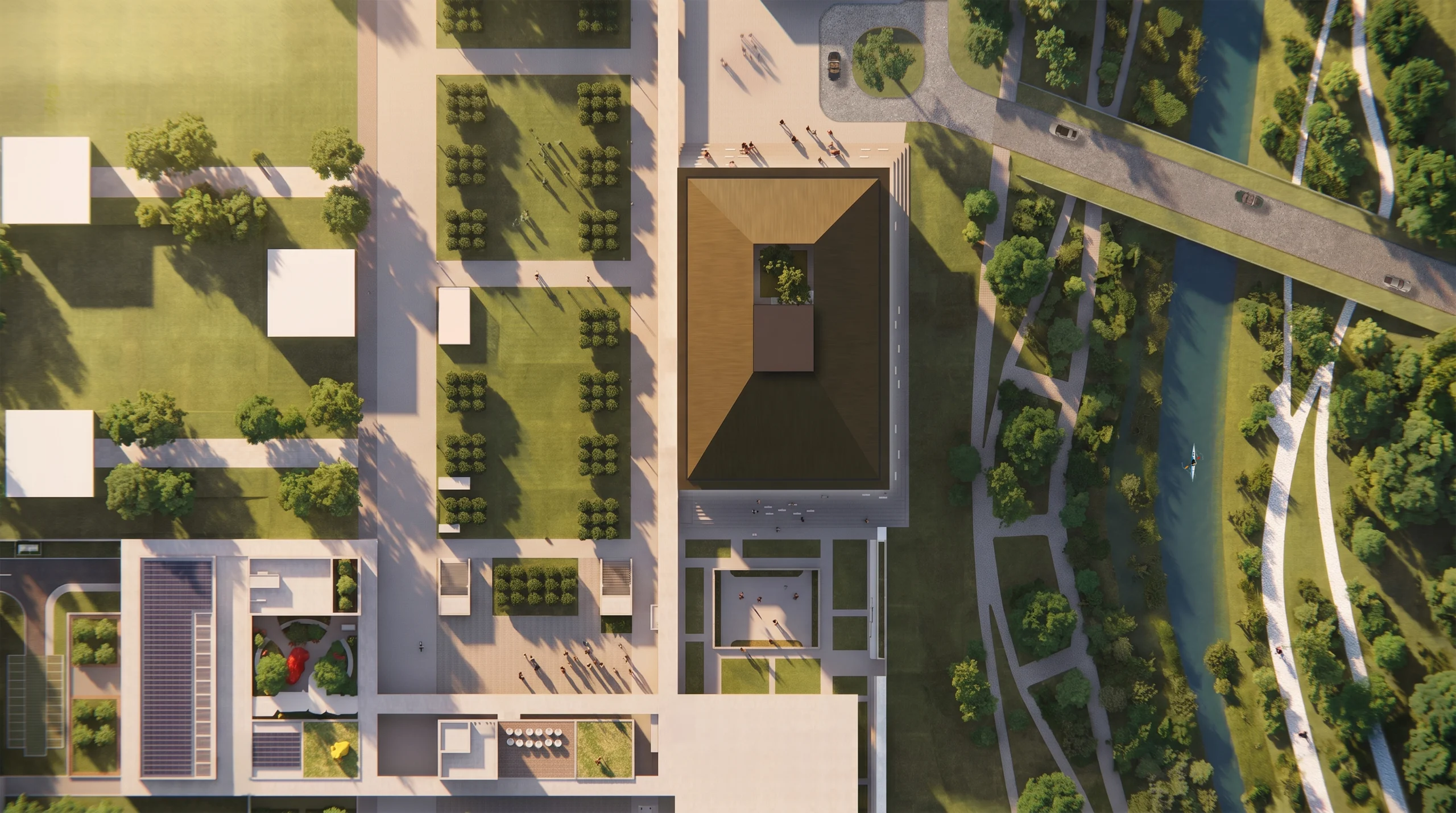
| Location | Korea |
| Site Area | 14,279 sqm |
| Completion | Concept Design Only |
| Services | Architecture |
| Owners | Confidential |
Learning from the Hanok
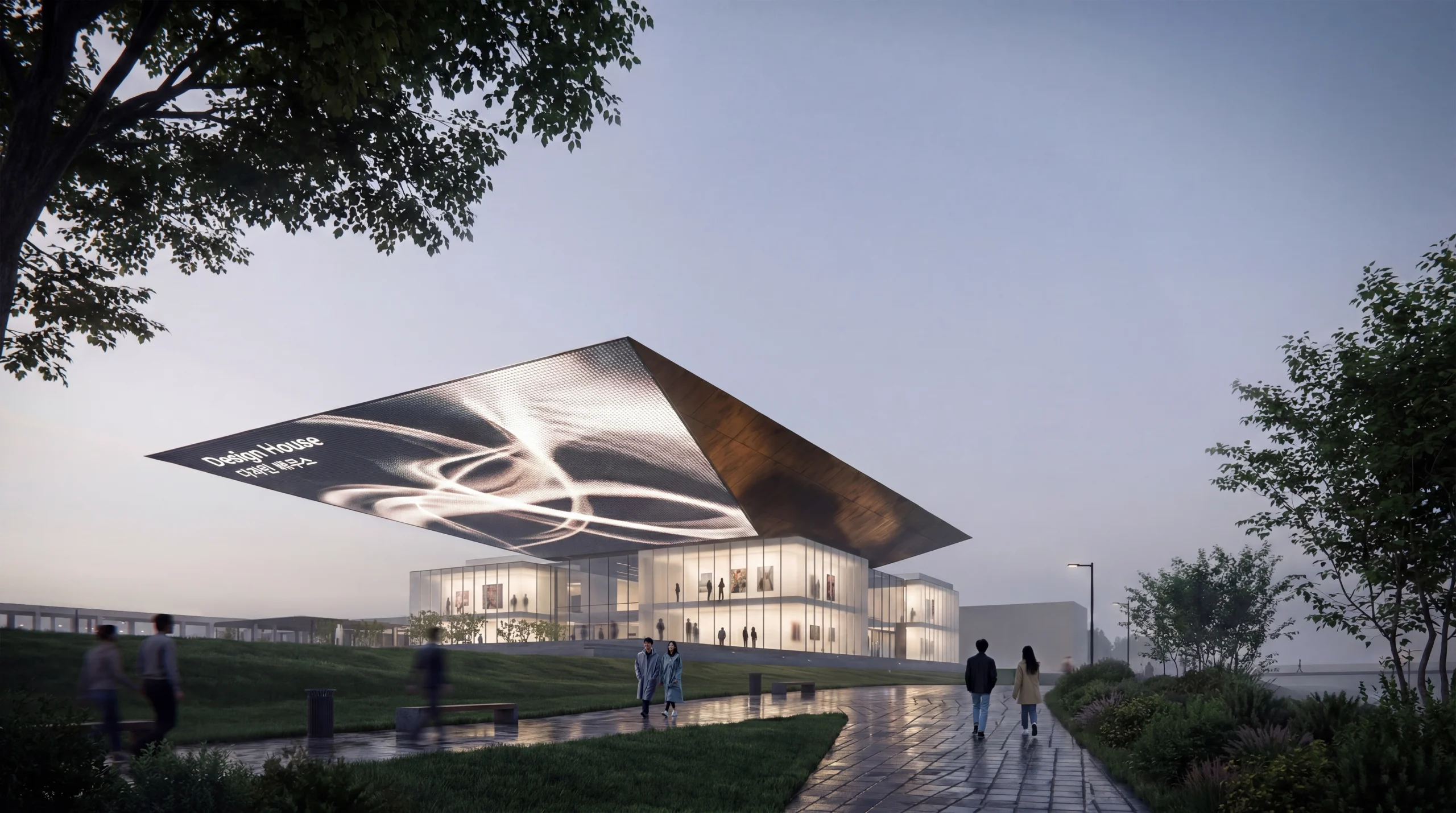
The architectural language of the museum draws heavily from the traditional Korean house. Not through literal replication, but through the reinterpretation of its spatial principles, human scale, and relationship with nature.
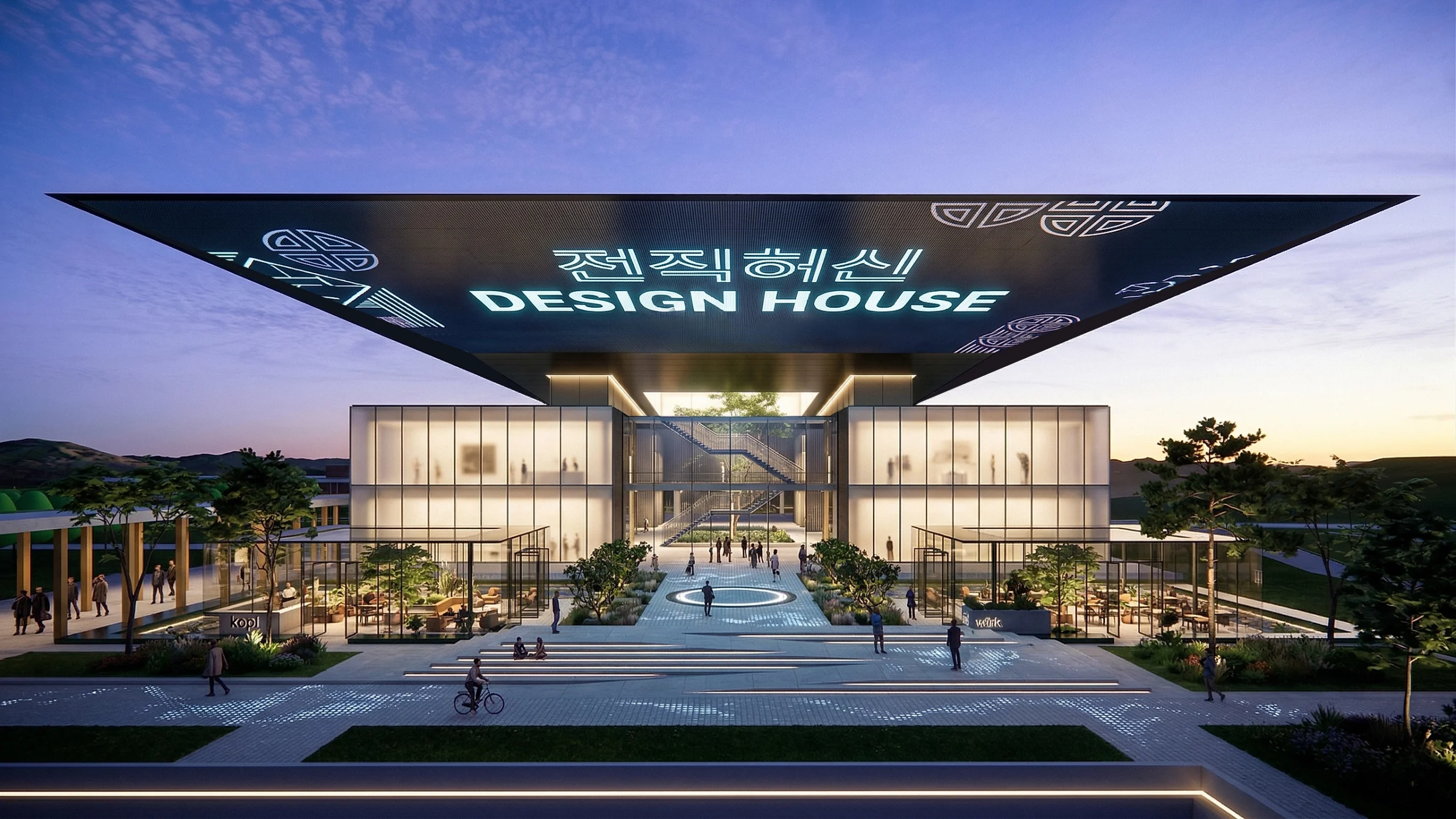
Rather than forming a singular monolithic structure, the museum is organised as a series of interconnected volumes gathered around courtyards and landscaped voids. This segmented composition reflects the agglomerated nature of the Hanok, where smaller architectural elements come together to create a unified environment.
Natural light, framed views, and moments of openness shape the visitor experience throughout the project. Landscape and architecture operate as one cohesive system, allowing the building to feel integrated into its setting rather than imposed upon it. The project embraces the Hanok philosophy of responding to climate and nature, creating spaces that feel calm and balanced.
The Design House
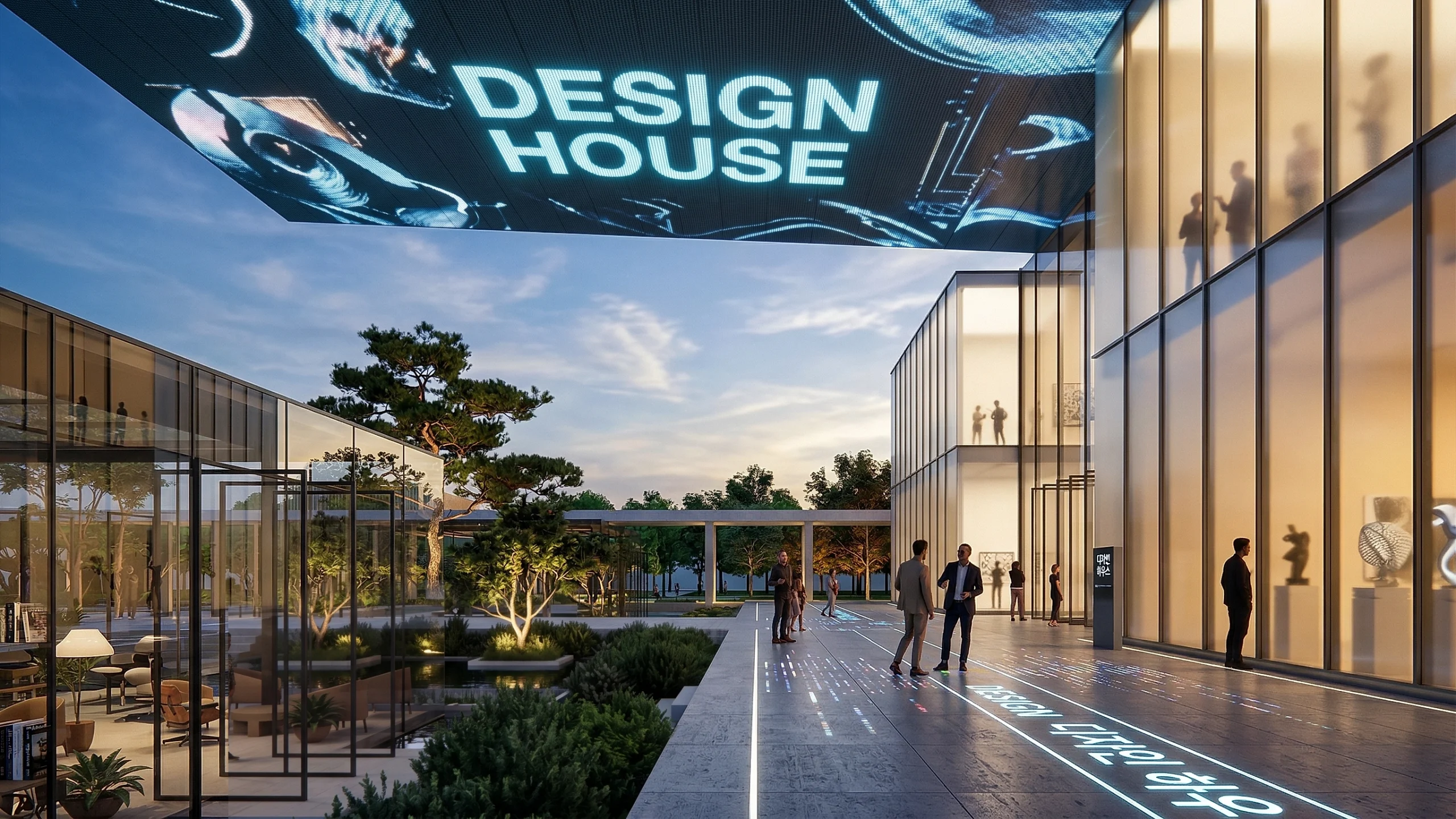
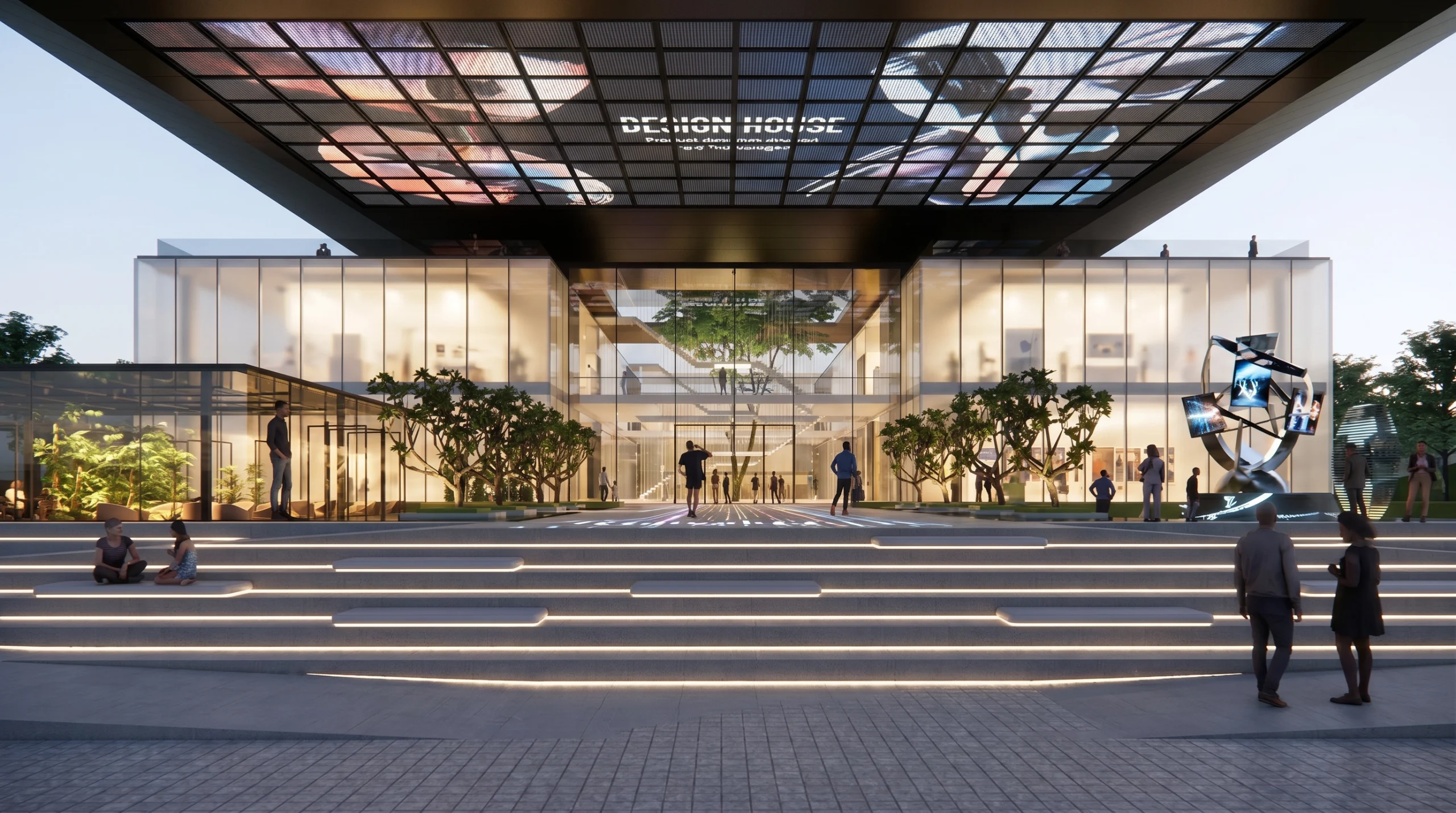
At the heart of the project is the concept of the “Design House”, which translates the intimacy and spatial rhythm of Korean domestic architecture into a large-scale public destination.
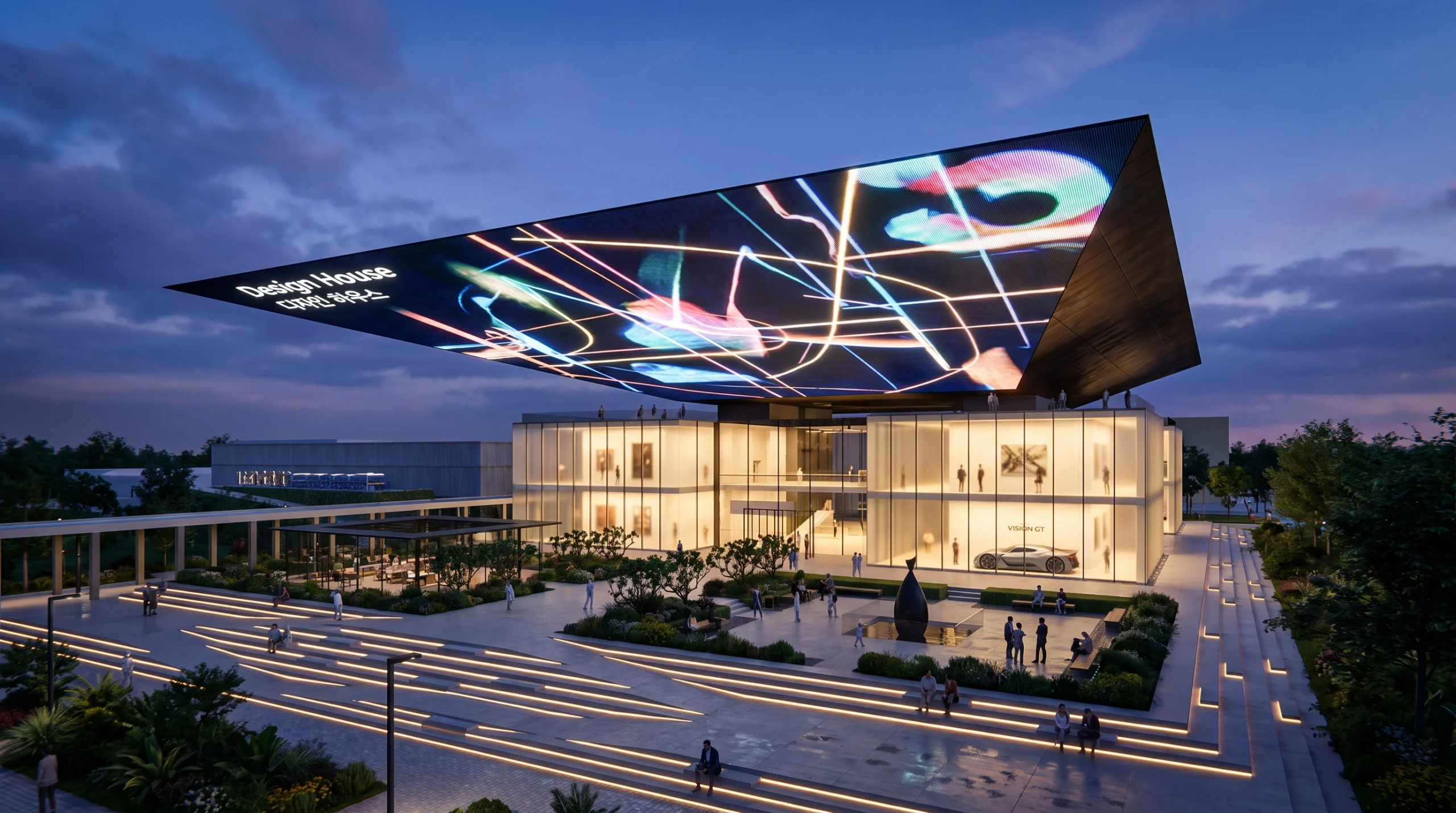
Visitors arrive through an expansive public plaza that acts as both gathering space and transitional threshold into the museum experience. Internally, circulation is designed as a layered journey where vertical movement becomes part of the architecture itself. The central cores connect permanent exhibitions, temporary galleries, educational spaces, and public programs while revealing framed perspectives across the museum and surrounding landscape.
A defining architectural feature is the sculptural LED roof, inspired by the elegant curvature of traditional Hanok rooflines. The roof is more than a visual icon, it’s an active cultural interface capable of displaying digital artworks, media installations, and event programming, transforming the museum into a dynamic beacon for the city.
Museography
Past, Present, Future
The museum narrative is organised into three interconnected exhibition themes that explore the evolution of Korean culture, art, and technological progress.
Past — Cultural Preservation
The first exhibition explores South Korea’s historic cultural achievements, celebrating the invention of Hangul under Sejong the Great to Minhwa paintings, ceramics, and calligraphy, the exhibition highlights how Korean design has long balanced clarity, symbolism, and material precision.
Present — Contemporary Art
The contemporary galleries examine how modern Korean artists and designers reinterpret cultural identity through evolving forms of expression. Influenced by urban life, shifting social dynamics, and digital culture, the spaces present a dialogue between tradition and modernity, simplicity and complexity, restraint and vibrancy.
Future — Technological Innovation
The final exhibition looks ahead to South Korea’s role at the forefront of artificial intelligence, mobility, smart technologies, and immersive environments. Inspired by innovators including Samsung Electronics, Hyundai Motor Company, Kia Corporation, and LG, the museum explores how technology and human-centered design continue to shape future cultural experiences.